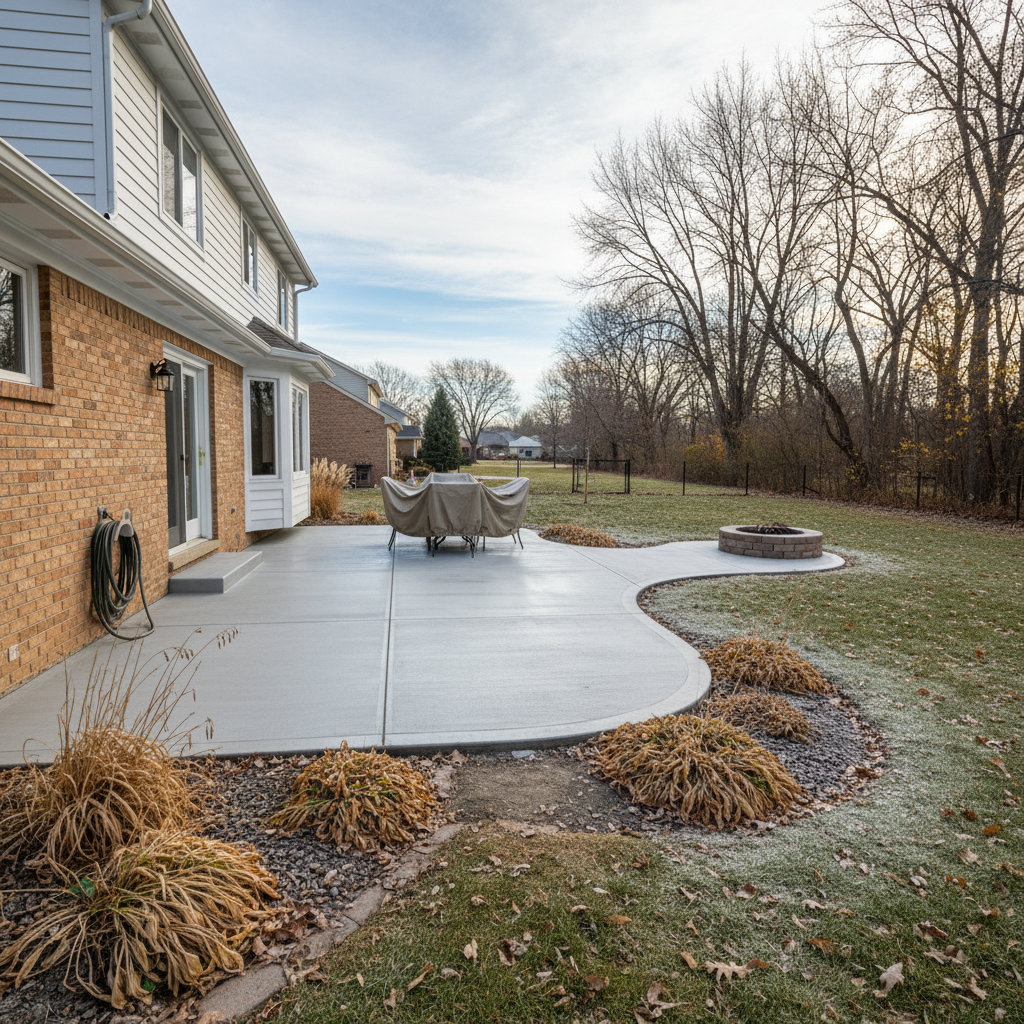
Alright, let's talk about concrete here in Aurora. Folks often ask me, "When's the 'best' time to get that new patio, driveway, or sidewalk poured?" And honestly, that's a really good question, because our weather around here isn't exactly predictable, is it? You can't just pick a random Tuesday in July and expect everything to be perfect. There's a bit more to it than that, especially if you want your concrete to actually last.
When to Schedule Your Aurora Concrete Project
For us, the sweet spot for pouring concrete usually falls into two main windows: late spring and early fall. Think May through June, and then September through early October. Why these times? It all comes down to temperature and moisture. Concrete cures best when the air temperature stays pretty consistently between 50 and 80 degrees Fahrenheit. It's not too hot, not too cold, and you generally avoid the extreme swings that can really mess with the curing process.
If it gets too hot, like those scorching August days we sometimes get, the water in the mix evaporates way too fast. That can lead to cracking, a weaker slab, and a whole lot of headaches down the road. On the flip side, if it's too cold — say, below 40 degrees — the concrete just doesn't hydrate properly. It slows way down, and you risk freezing, which can completely ruin its strength and durability. We've seen plenty of projects go south because someone tried to rush things in November or push it too early in March. What a waste!
Weather Conditions That Affect the Work
Beyond just temperature, there are other weather factors we're always keeping an eye on. Rain, for instance, is a big one. You absolutely cannot pour concrete in the rain. It dilutes the mix, washes away the cement paste, and seriously compromises the strength and finish. We're talking about a completely ruined surface if it gets rained on during placement and finishing. That's why we're constantly checking the forecast, sometimes right up to the hour before we start a job.
Wind can also be an issue, especially on hot days. A strong, dry wind can speed up that surface evaporation I mentioned earlier, leading to plastic shrinkage cracking. We do have ways to lessen its impact, like using evaporation retarders or temporary windbreaks, but it's always something we're mindful of. And humidity plays a role too. High humidity in cooler weather means slower drying, which can be good, but too much can also delay finishing.
Another thing that's pretty unique to our area, particularly in older neighborhoods like those around the Near East Side or West Side, is the clay soil. It can hold a lot of moisture. So, if we're digging out for a new slab, we need to make sure that subgrade is properly prepared and drained. You definitely don't want your new concrete sitting on a soggy bed, especially with our freeze-thaw cycles.
Protecting Your Concrete Investment Year-Round
Once your concrete is in, the job isn't over. You've made an investment, and you want it to last, right? Here's what you need to think about:
- Curing is Critical: After we pour, we'll make sure it's properly cured. This usually means keeping it moist for several days, sometimes with curing compounds, plastic sheeting, or even just regular misting. Don't walk on it or put heavy stuff on it too soon. We'll give you specific timelines.
- Sealing is Your Best Friend: I honestly can't stress this enough. Sealing your concrete, especially exposed aggregate or decorative finishes, is vital here in Aurora. Our winters are brutal with freeze-thaw cycles and de-icing salts. A good quality penetrating sealer will protect against moisture intrusion, chemical damage, and even UV rays. You'll want to re-seal every 2-3 years, depending on traffic and exposure. It's a small cost for huge protection.
- Snow and Ice Management: Be smart about de-icing. Avoid rock salt (sodium chloride) on new concrete, especially in its first year. It's super corrosive. Calcium chloride or magnesium chloride are generally safer options, but use them sparingly. Better yet, shovel early and often. Don't let ice build up.
- Clean It Regularly: Just like anything else, a little cleaning goes a long way. Sweep off debris, hose it down periodically. If you get oil or grease stains, clean them up quickly before they soak in.
Look, concrete is tough, but it's not indestructible, especially with the kind of weather we get here in Illinois. By understanding the best times to pour and how to protect it afterwards, you're setting yourself up for a long-lasting, beautiful surface. If you've got questions about your specific project or want to talk about scheduling, give us a call at Mighty Concrete Inc. We're always happy to share what we know.