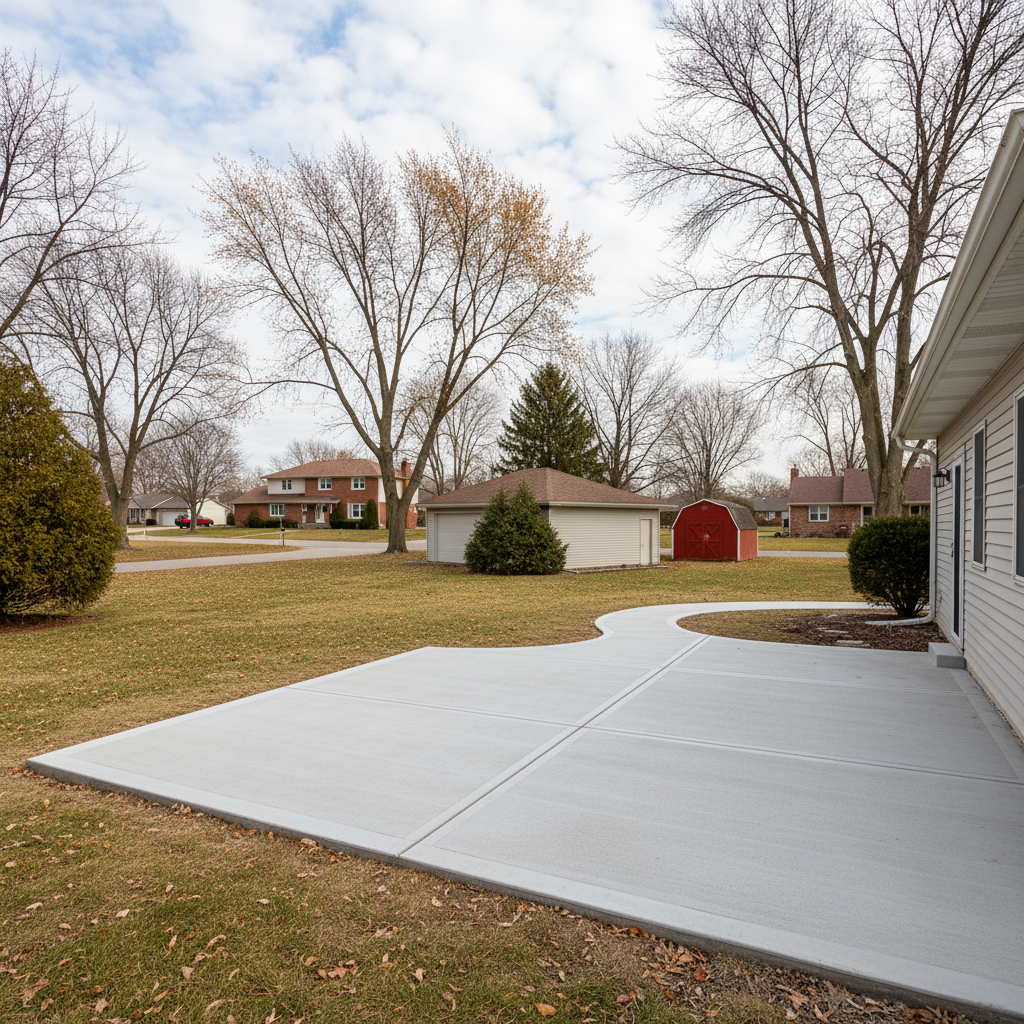
Ever watch a pristine new driveway start scaling or cracking after just one harsh Midwest winter? Here around Aurora, our local climate does not cut any slack when it comes to concrete work. Between clay-heavy soils that shift with the moisture, scorching July humidity, and sudden sub-zero winter plunges, timing your pour matters just as much as the mix itself.
Understanding the Aurora Concrete Window
Concrete does not dry out — it cures through a chemical hydration process that is deeply sensitive to temperature. When Mighty Concrete is working on residential projects across the Fox Valley, we look for that window where daytime temperatures sit consistently between 50 and 85 degrees.
Late spring and early fall are prime times for concrete installation in our area. Months like May and September give us steady, moderate weather without the extreme heat that causes surface water to flash-evaporate, or the nighttime frost that stops the curing process dead in its tracks. If you try to rush a pour in the dead of a humid July afternoon, you are fighting rapid moisture loss. On the flip side, pushing your luck into late November means dealing with cold-weather additives, insulated blankets, and sleepless nights worrying about overnight freezes.
Beat the Rush and Schedule Smart
Most homeowners start thinking about outdoor concrete spaces right when the weather breaks nice in June. That creates a massive bottleneck. At Mighty Concrete, we always tell homeowners to plan ahead. Booking your project in early spring or scheduling for an early fall slot gets you ahead of the peak summer rush while securing the most stable weather conditions for your slab's structural integrity.
Protecting Your Investment Year-Round
Once the pour is cured, your job is not quite finished. Aurora weather puts flatwork through hundreds of freeze-thaw cycles every single year. Water gets into microscopic pores, turns to ice, expands, and breaks things apart from the inside out.
- Apply a breathable, quality sealer every couple of years to block out moisture and road salts.
- Keep expansion joints clear of debris so the concrete can shift naturally as the ground moves.
- Shovel snow carefully, and skip harsh rock salt or chemical de-icers that pit the surface during January freeze storms.
Taking care of your concrete investment through every changing season ensures your driveway or patio handles whatever the weather throws at Aurora next.