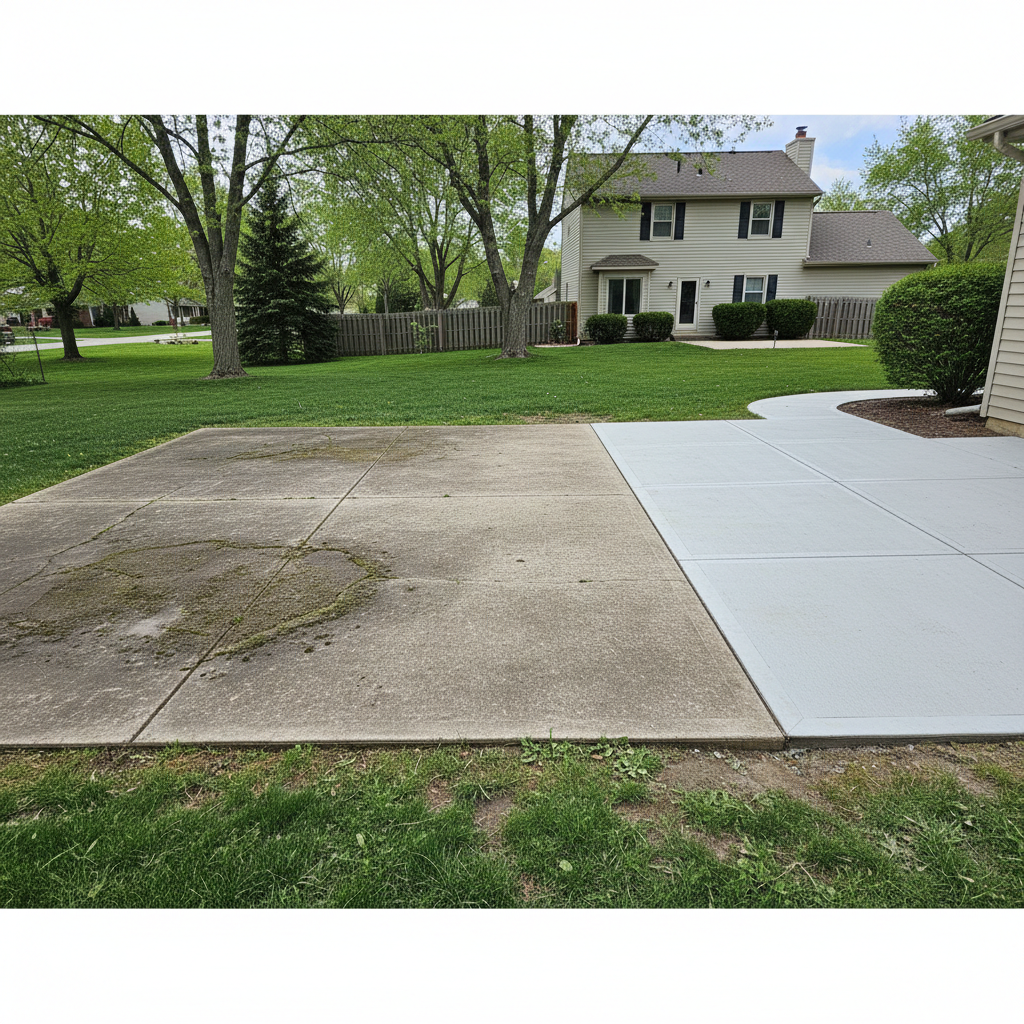
Alright, let's talk about that new driveway, patio, or walkway you're thinking about for your Aurora home. When it comes to flatwork, you've generally got two big contenders: good ol' poured concrete or interlocking pavers. Folks around here ask me all the time which one's better, and honestly, there's no single right answer for everyone. It really depends on what you're looking for, what your budget is, and how much fuss you want to deal with down the road.
I've been pouring and laying down concrete and pavers for years, seen it all, from the fancy new builds in Stonebridge to the older homes in the Near West Side. So, let's break down the pros and cons of each, plain and simple.
Poured Concrete: The Tried and True Workhorse
Poured concrete is probably what you picture when you think of a driveway. It's just a mix of cement, aggregates, and water, poured into forms, and then it hardens into a solid slab. It's been the go-to for a long time for good reasons.
Cost
Generally speaking, a standard poured concrete slab will cost less upfront than pavers. You're paying for the materials, the labor to mix and pour it, and the finishing work. It's a pretty efficient process for us to get done, which helps keep your costs down.
Durability & Maintenance
A well-installed concrete slab is tough. It can handle heavy vehicles, our crazy Illinois winters with all the freeze-thaw cycles, and general wear and tear. You'll want to seal it every few years to protect it, especially from de-icing salts and stains. The biggest thing to watch out for is cracking. Even with proper control joints, concrete can crack — it's just the nature of the material. When it does, fixing it often means patching, which can be noticeable, or even cutting out and replacing a whole section. That's a bigger job, wouldn't you say?
Appearance
Plain gray concrete is, well, plain gray. It's functional. You can get decorative concrete, like stamped or stained, which completely changes how it looks, but we're talking about basic poured concrete here. It offers a clean, continuous look. Some people like that minimalist vibe, others find it a bit boring.
Interlocking Pavers: The Flexible Alternative
Pavers are individual units, usually made of concrete or sometimes natural stone, that fit together like puzzle pieces over a prepared base of gravel and sand. They've gained a lot of popularity over the last couple of decades.
Cost
Expect to pay more for pavers upfront. The materials themselves cost more per square foot, and the installation process takes more labor. Each paver has to be laid individually, the base needs careful preparation, and then sand is swept into the joints. It's a craft, and that extra work costs more.
Durability & Maintenance
This is where pavers really shine, especially in our climate. Because they're individual units, they have a bit of flexibility. When the ground underneath shifts due to our clay soils expanding and contracting, or when we get those deep freezes, pavers can move slightly without cracking. If one gets damaged, you can usually just lift it out and replace that single unit, which is a huge advantage over concrete. You'll still want to seal them to protect the color and prevent weeds from growing in the joints, but the repair aspect is a big win. You might need to sweep more sand into the joints every few years, too.
Appearance
Pavers offer a ton of design flexibility. You've got countless colors, shapes, and patterns to choose from. You can create intricate designs, borders, and really customize the look to match your home's style. They definitely have a more upscale, refined look than plain concrete, which can boost your home's curb appeal significantly.
My Take: What I Recommend for Aurora Homeowners
So, which one should you choose? Look, if you're on a tighter budget and you need a solid, functional surface that will last, poured concrete is a fantastic choice. It's reliable, and with proper installation and sealing, it'll serve you well for decades. Just be prepared for the possibility of cracks over time and the less-than-seamless repair if they do happen.
However, if your budget allows for it, and you're looking for maximum flexibility, easier repairs, and a higher-end aesthetic that can really make your home stand out, I lean towards pavers, especially for patios and walkways. For driveways, they're also excellent, but the cost difference becomes more pronounced over a larger area. The way pavers handle our freeze-thaw cycles and the ease of replacing a single damaged unit often makes them worth the extra investment in the long run. You get that feeling of knowing that if something goes wrong, it's not a major headache to fix.
Ultimately, both are good options when installed correctly. It really boils down to your priorities. Give Mighty Concrete Inc. a call if you want to talk through your specific project. We can help you figure out what makes the most sense for your home and your wallet.