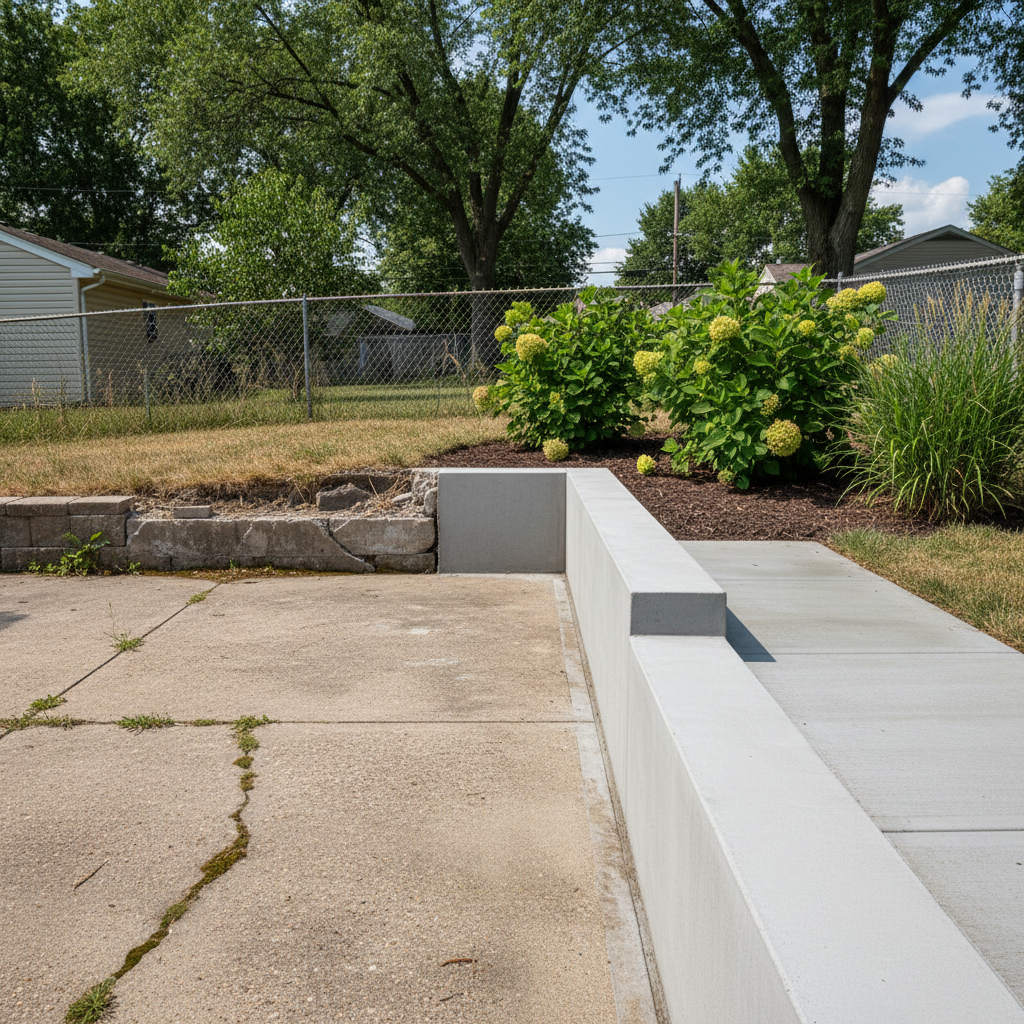
Alright, let's talk retaining walls. Maybe you've got a slope in your yard, or you're trying to grab back some usable space, or even dealing with erosion. Whatever the reason, you're probably looking at two main concrete options: segmental block walls or poured concrete walls. As someone who's built plenty of both right here in Aurora, I can tell you there's a big difference. It's not just how they look, but how they perform and, of course, what they'll cost you.
Segmental Block Retaining Walls: The Modular Approach
You've seen these everywhere, haven't you? They're made from individual concrete blocks, usually with some kind of lip or pin system that locks them together. Think of them like giant LEGOs for your landscaping. They're popular for a reason, and they definitely have their place.
The Good Stuff:
Easier Installation for DIYers (Sometimes): If you're just talking about a small, low garden wall, you might be able to tackle a block wall yourself. But for anything significant, you'll still want a pro. They don't need forms, which does speed up our process a bit.
Aesthetic Variety: Blocks come in all sorts of colors, textures, and shapes. You can find something that looks like natural stone, or maybe something more modern. There's a lot of flexibility to match your home's style.
Flexibility with Movement: Because they're individual units, block walls can handle a little ground movement without cracking as easily as a solid slab might. That can be a real plus with our freeze-thaw cycles here in Illinois.
The Not-So-Good Stuff:
Structural Limitations: This is the big one, honestly. Segmental block walls are typically gravity walls. They rely on their own weight and that interlocking system to hold back soil. For taller walls (say, over 4 feet), they often need extensive geogrid reinforcement reaching way back into the soil, which adds to the excavation and material cost. Without proper engineering and installation, they can bulge or just plain fail.
Maintenance: Over time, individual blocks can shift, settle unevenly, or even spall because of water getting in and our harsh winters. We've seen plenty of block walls in older Aurora neighborhoods, especially those built on the clay soils common around here, where blocks have started to lean or separate. Oh, and weeds can grow in the gaps between blocks, requiring regular upkeep.
Durability in Extreme Conditions: While they handle minor movement, these aren't as tough as a monolithic concrete structure when it comes to extreme pressures or long-term, heavy loads. Water can also seep through the joints more easily, potentially leading to issues behind the wall.
Poured Concrete Retaining Walls: The Solid Solution
Now, this is where Mighty Concrete Inc really shines. Poured concrete walls are exactly what they sound like: we build forms, pour ready-mix concrete, and let it cure into one single, solid structure. These are serious walls, built to last.
The Good Stuff:
Unmatched Strength and Durability: This is the undisputed champion, no question. A properly designed and poured concrete wall, complete with rebar reinforcement, is incredibly strong. It's a monolithic structure, meaning it acts as one solid unit against the soil pressure. These walls can handle much higher loads and heights without a problem. They're built to withstand decades of pressure, freeze-thaw cycles, and anything else our Illinois weather throws at them.
Low Maintenance: Once it's cured, a poured concrete wall is practically maintenance-free. There are no individual blocks to shift, no gaps for weeds, and far fewer points of failure. You might want to seal it periodically, but that's about it.
Versatility in Design: Don't just think 'boring grey wall.' Poured concrete can be formed into curves, stained, stamped with patterns, or faced with stone veneer. You can get a smooth, modern look or something that mimics natural rock. The design possibilities are actually more extensive than with blocks if you're working with a skilled crew.
Water Management: With proper drainage systems (like weep holes and gravel backfill), poured concrete walls are excellent at managing water. They prevent hydrostatic pressure buildup behind the wall, which, by the way, is a common cause of retaining wall failure.
The Not-So-Good Stuff:
Higher Initial Cost: Generally, poured concrete walls will have a higher upfront cost than segmental block walls, especially for shorter ones. This is due to the labor involved in setting up forms, the cost of the concrete itself, and the rebar. However, when you factor in the long-term durability and lack of maintenance, that initial investment often pays off.
More Complex Installation: This isn't a DIY project. Poured concrete requires specialized equipment, knowledge of concrete mixes, proper rebar placement, and experience with formwork. You absolutely need experienced professionals for this, no two ways about it.
Less Forgiving: Once it's poured and cured, it's permanent. There's no adjusting individual blocks later. That's why meticulous planning and execution are critical.
My Recommendation for Aurora Homeowners
Look, for small garden borders or purely decorative, low-height features, segmental blocks are fine. They're attractive and they serve a purpose. But if you're talking about a structural retaining wall – one that's holding back a significant amount of earth, dealing with drainage, or supporting anything important – I'm going to tell you to go with poured concrete every single time.
Especially here in Aurora, with our clay soils that can expand and contract, and our brutal freeze-thaw cycles, you need something that's engineered to stand up to the elements. A poured concrete wall, properly reinforced and installed, gives you real confidence. It's a long-term investment that will outlast multiple block walls and save you headaches and repair costs down the road. You build it once, and you build it right.
When you're ready to talk about a retaining wall that's truly built to last, give us a call at Mighty Concrete Inc. We'll walk you through the options and make sure you get a wall that works for your property and stands strong for decades.