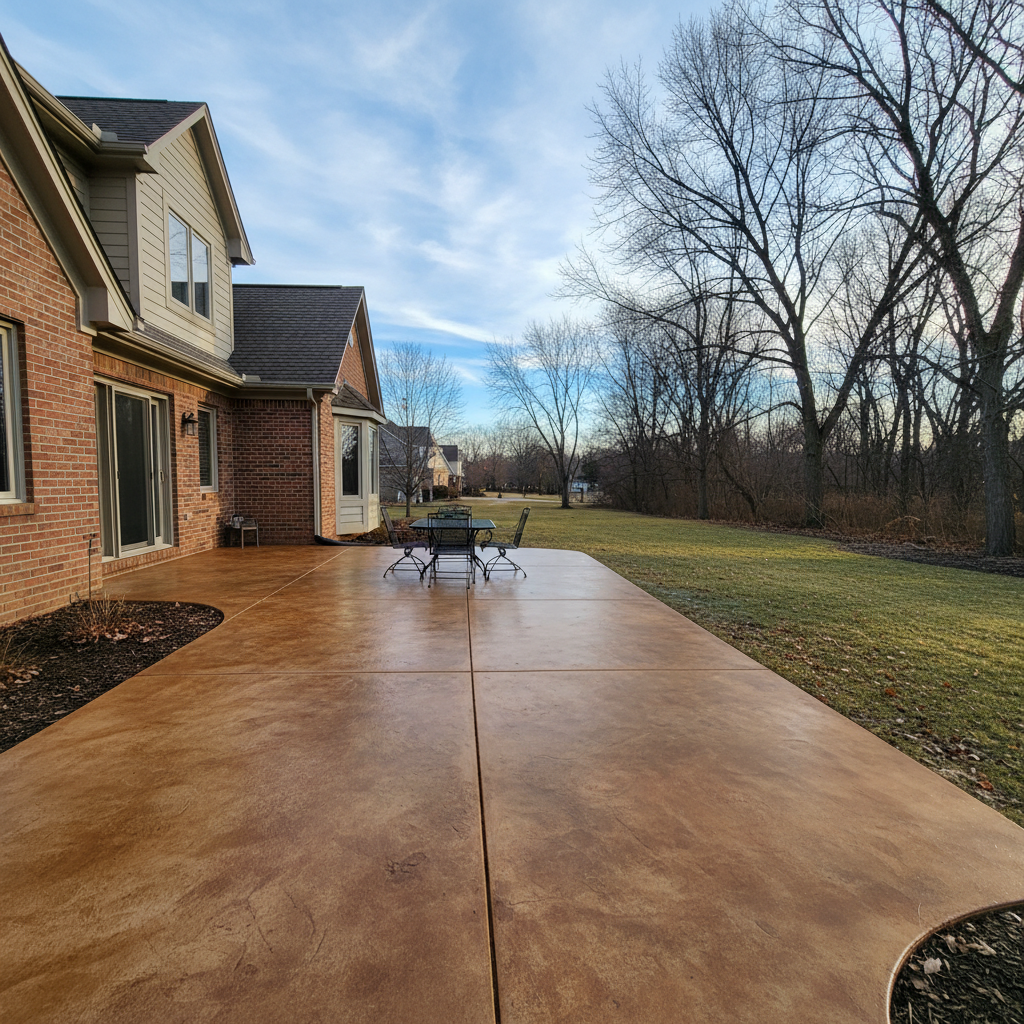
You've got some concrete around your Aurora home, maybe a patio, a walkway, or even a basement floor, and you're thinking about staining it. It's a great way to add color and really bump up the curb appeal or indoor aesthetic. But when's the best time to do it? And what about our crazy Illinois weather?
I've been doing this for years with Mighty Concrete Inc, and I've seen firsthand how much the seasons and the forecast can impact a staining job. You want that stain to penetrate properly, cure right, and last. That means you can't just pick any random day.
When to Schedule Your Concrete Staining in Aurora
For outdoor concrete staining, spring and fall are usually your best bets here in Aurora. I'm talking late April through June, and then again from September through early November. Why those windows?
Temperature is Key: Stains, especially acid-based ones, need specific temperatures to react and cure correctly. You're generally looking for ambient air temperatures between 50°F and 85°F. If it's too cold, the stain won't react. Too hot, and it can dry too fast, leading to uneven penetration or a blotchy finish. We get plenty of days in that sweet spot during spring and fall.
Humidity Matters: High humidity can slow down drying times, which isn't always a bad thing for stain penetration, but extremely high humidity can sometimes cause issues with certain sealers. Low humidity can make things dry too fast. Again, spring and fall tend to offer more moderate humidity levels compared to the dog days of summer.
Avoid Direct Sun: This is a big one. You don't want the sun beating down on the concrete while you're applying stain. It'll dry way too fast. Overcast days are ideal. If it's sunny, we'll often start early in the morning or later in the afternoon when the sun isn't directly overhead, or work on shaded areas.
Summer can work, but you've got to be careful. Those 90-degree days with high humidity? Not ideal. The concrete itself can get incredibly hot, which is a problem. Winter? Forget about it for outdoor work. The ground is often frozen, and the temperatures are way too low for any stain to do its job.
For indoor concrete, like a basement floor, you have a lot more flexibility since you control the environment. Still, you want to make sure the concrete is fully cured if it's new (give it at least 28 days, sometimes more), and the space is well-ventilated.
Weather Conditions to Watch Out For
Beyond just temperature, there are a few other weather conditions that can ruin a concrete staining project:
Rain: This one's obvious, but crucial. You can't stain concrete if it's wet or if rain is in the forecast within 24-48 hours after application, depending on the product. The surface needs to be bone dry for proper penetration, and rain will wash away or dilute the stain before it can set. We're always checking the radar for those pop-up summer storms we get around here.
Wind: A little breeze is fine, helps with ventilation. But strong winds can cause problems, especially with spray applications. It can lead to uneven coverage and blow dust and debris onto the wet stain or sealer. Not what you want after all that prep work.
Frost/Freezing: Absolutely no staining if there's a chance of frost overnight. The water in the stain or sealer can freeze, expanding and damaging the fresh finish. This is why late fall can be tricky – one day it's 60, the next it's dipping below freezing at night.
Protecting Your Stained Concrete Year-Round
Once your concrete is beautifully stained and sealed, you want it to last. Here's how to protect your investment, especially with Aurora's freeze-thaw cycles and general wear and tear:
Seal, Seal, Seal: This is non-negotiable. The sealer is what protects the stain from UV rays, abrasion, and moisture. I typically recommend a high-quality acrylic sealer for most outdoor applications. It's the sacrificial layer that takes the abuse.
Re-seal Regularly: Depending on traffic and exposure, you'll need to re-seal your outdoor stained concrete every 1-3 years. High-traffic areas like a front walk might need it more often. You'll know it's time when water no longer beads up on the surface. Don't wait until the stain itself starts to fade or wear.
Clean Gently: For outdoor concrete, a good sweep and occasional rinse with a garden hose are usually enough. For tougher spots, a mild detergent and a soft brush work. Avoid harsh chemicals or pressure washers set too high, as they can strip the sealer and even damage the stain.
Watch the De-icers: Be very careful with de-icing salts in winter. Many common de-icers, especially those containing ammonium nitrates or sulfates, can severely damage concrete and its sealer. Stick to sand for traction or use calcium chloride-based products sparingly. Better yet, shovel early and often.
Protect from Heavy Objects: If you've got stained concrete in your garage or a workshop, use mats under toolboxes or heavy equipment to prevent scratching and chipping. For patios, felt pads on furniture legs can help.
Staining your concrete is a fantastic upgrade, and when done right and properly maintained, it'll look great for years. Just remember, patience and paying attention to the weather are key. If you're in the Aurora area and thinking about a concrete staining project, give Mighty Concrete Inc a call. We'd be happy to talk through your options and get it done right.