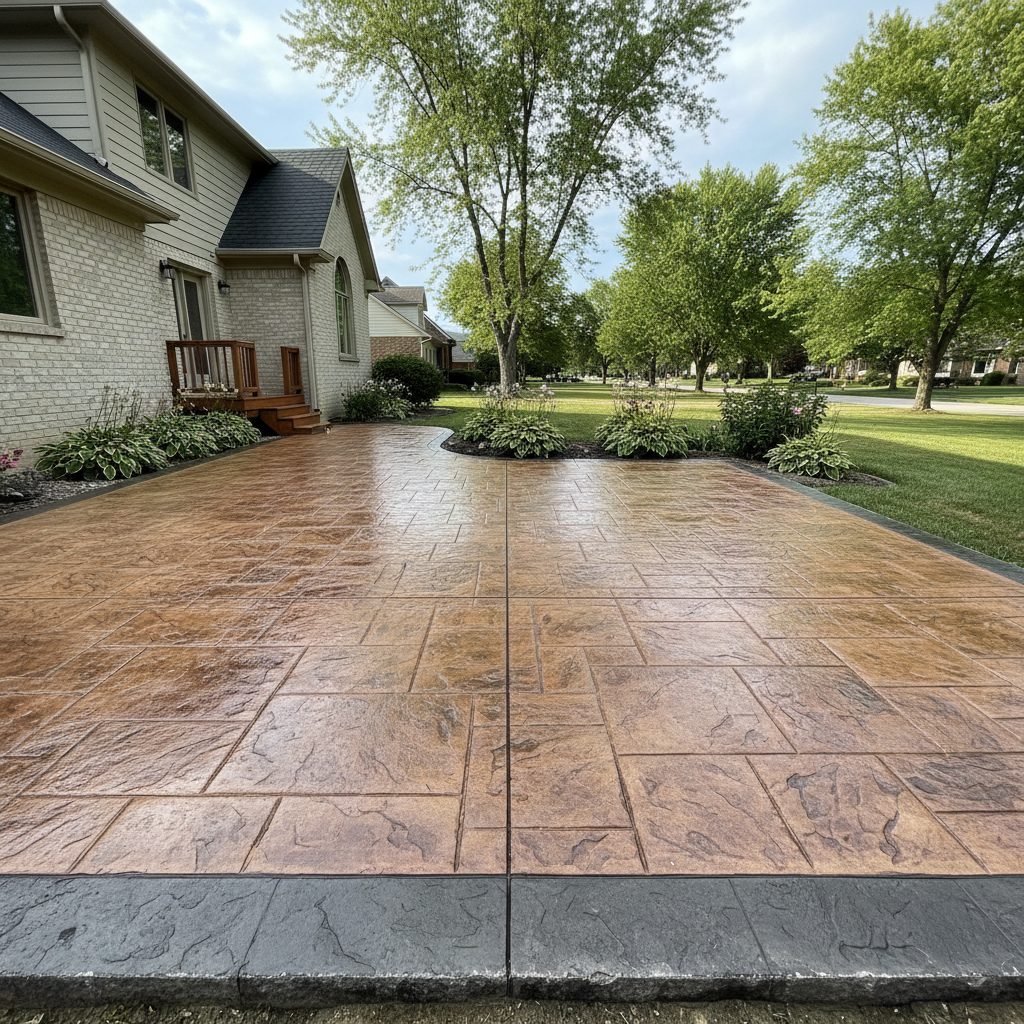
You've invested in stamped concrete, and that's smart. It adds real curb appeal and can last a long, long time if you treat it right. But let's be real, it's not a set-it-and-forget-it deal, especially with the kind of weather we get here in Aurora. We see everything from scorching summers to brutal winters with freeze-thaw cycles that can be tough on any concrete. So, how do you make sure your stamped patio or driveway stays looking sharp and holds up against Mother Nature?
Extend the Life of Your Stamped Concrete
The biggest thing you can do to extend the life of your stamped concrete is proper sealing. When we finish a job at Mighty Concrete Inc, we always apply a high-quality sealer. But that's not a one-and-done thing. You'll need to reseal it every two to three years, sometimes even sooner if it's a high-traffic area or gets a lot of direct sunlight. A good sealer protects against moisture penetration, UV rays, and general wear and tear. It also enhances the color and makes cleaning easier. Think of it like waxing your car – it keeps it looking good and protects the paint.
Another key is to avoid harsh chemicals. Don't use de-icers that contain ammonium sulfates or nitrates on your concrete in the winter. These can break down the sealer and even damage the concrete itself. Stick to sand for traction, or use de-icers specifically labeled as safe for concrete. And when you're cleaning, mild detergents are your friend, not strong acids or pressure washers set to blasting mode.
Regular Maintenance: What You Need to Do
Regular maintenance for stamped concrete isn't complicated, but it is consistent. Here's the rundown:
- Keep it clean: Sweep off leaves, dirt, and debris regularly. This prevents organic matter from breaking down on the surface and potentially staining it.
- Wash it down: Every few months, give it a good rinse with a garden hose and a mild detergent. For tougher spots, a soft-bristle brush can help. Just don't go crazy with a wire brush, you'll scratch the sealer.
- Address spills immediately: Oil, grease, paint, or anything else that can stain should be cleaned up as soon as it happens. The longer it sits, the harder it is to remove.
- Watch for weeds: Weeds can sprout in cracks or expansion joints. Pull them out promptly before their roots cause bigger issues.
During winter, be extra careful. As I mentioned, avoid those harsh de-icers. Shovel snow promptly to prevent prolonged moisture exposure. If you use a snowblower, make sure the chute is set high enough so it doesn't scrape the surface. We've seen plenty of damage from aggressive snow removal over the years, especially in older neighborhoods like those around the Near East Side where concrete might have seen a few more winters.
Warning Signs of Problems
Your stamped concrete will usually give you some clues if something's going wrong. Don't ignore these:
- Fading color: If your concrete is losing its vibrant color, it's a strong sign the sealer is wearing thin and needs to be reapplied. This is usually one of the first things you'll notice.
- Surface flaking or spalling: This looks like small pieces of concrete peeling or popping off the surface. It's often caused by moisture getting into the concrete and freezing, then expanding. This is a serious sign that your sealer isn't doing its job or wasn't applied correctly in the first place.
- Cracks: Hairline cracks are pretty normal with concrete over time, but if you see cracks widening, spreading rapidly, or if they're more than a quarter-inch wide, that's a problem.
- Pitting: Small holes or depressions on the surface can indicate de-icer damage or poor quality concrete.
- Persistent staining: If you're cleaning regularly but stains keep appearing or won't come out, your sealer is likely compromised.
When to Call a Professional
You can handle most of the day-to-day stuff, but there are times when you really should call in the pros. If you're seeing significant flaking, deep or rapidly expanding cracks, or if you're unsure about the best way to clean a tough stain without damaging the surface, give us a call. Resealing can be a DIY job, but if you're not comfortable with it or if your concrete needs a deep clean and repair before resealing, it's better to have someone experienced handle it. We've got the right equipment and know-how to assess the damage and recommend the best course of action.
Sometimes, what looks like a small issue can be a symptom of a bigger problem underneath. Getting an expert opinion early can save you a lot of headache and money down the road. Don't wait until a small crack turns into a major repair project. We're here to help keep your stamped concrete looking its best for years to come.